
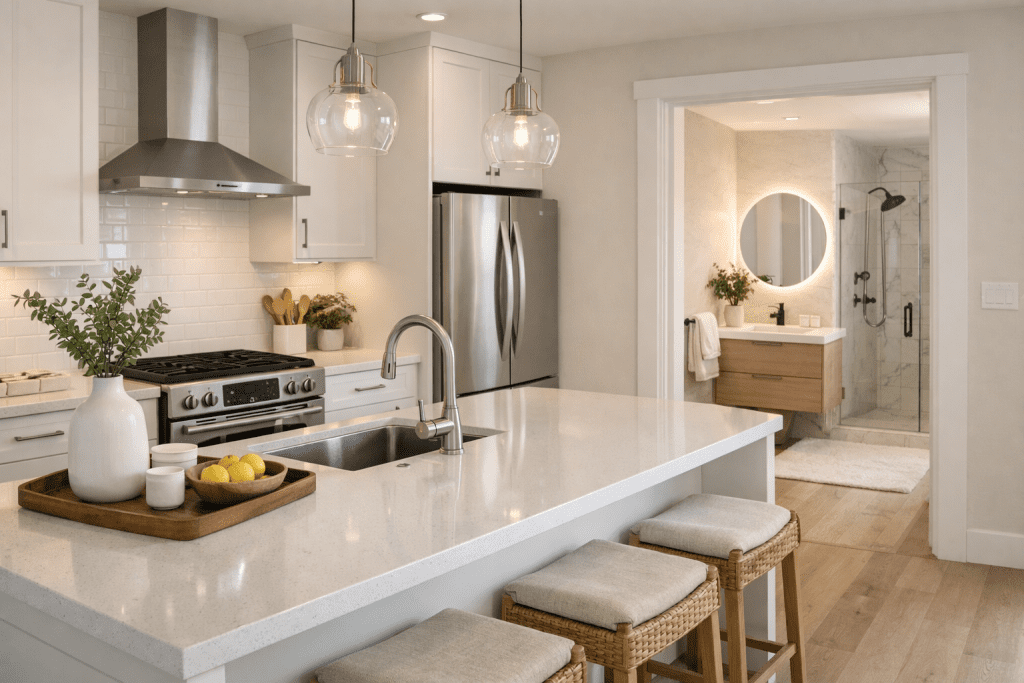
When a home hits the market today, buyers are not just looking for four walls and a roof. They are looking for a place that feels current, functional, and easy to move into without a long repair list. With home prices high and household budgets stretched, many buyers have little interest in taking on major updates after closing. That shift has changed the way sellers should think about preparation. A good cleaning and a fresh coat of paint are no longer always enough. In many cases, the homes that sell fastest and strongest are the ones that feel thoughtfully updated before they are listed.
That does not mean every homeowner needs a full renovation. The smartest approach is to focus on the improvements that most improve buyer appeal and, when possible, return a meaningful share of their cost at resale. Over the years, kitchens and bathrooms have often been considered the stars of home makeovers. They still matter a great deal. But when you look at current return-on-investment data, the story is a little more nuanced than it used to be.
Why home updates matter more than ever
Four or five decades ago, sellers could often list a property after a thorough cleaning, a few repairs, and some fresh paint. Today’s buyers are more comparison-driven. They shop online before they ever visit in person, and they can quickly compare your home against several others in the same price range. If your home looks dated, they may assume it will take too much time, money, or effort to bring it up to modern standards.
That is especially true in a market where affordability is tight. Buyers who are already stretching to qualify for a mortgage often do not want to immediately replace countertops, redo a bathroom, or tackle a flooring project. In other words, the more move-in ready your home feels, the more competitive it can be.
Today, the best-prepared home is often the one that reduces uncertainty. Buyers pay close attention to visible updates, because those changes signal a well-maintained property and fewer surprises after closing.
What home makeovers get the biggest return?
When homeowners ask which updates are worth the money, the answer depends on whether the goal is to maximize resale value, improve marketability, or simply make the home more enjoyable before selling. National data from industry reports shows a clear pattern: some of the highest percentage returns come from smaller exterior projects, while kitchens and bathrooms still remain highly influential in the buying decision.
According to the 2024 Cost vs. Value Report, several modest projects deliver outstanding average returns nationwide:
- Garage door replacement: about 194% return on cost
- Steel entry door replacement: about 188% return on cost
- Manufactured stone veneer: about 153% return on cost
- Minor midrange kitchen remodel: about 96% return on cost
- Midrange bathroom remodel: about 74% return on cost
Those numbers are important because they show that the biggest payoff is not always inside the kitchen or bath. Exterior updates that improve curb appeal and first impressions can outperform bigger interior renovations in pure percentage return. But kitchens and bathrooms are still near the top of the list for a different reason: they are the rooms buyers inspect most closely.
Kitchens: still a major selling point
The kitchen remains one of the most emotionally important spaces in the home. Buyers picture themselves cooking there, gathering there, and living in the space every day. That is why an outdated kitchen can hold back an otherwise attractive home.
That said, the data suggests that smaller, targeted kitchen updates usually make more financial sense than a complete luxury overhaul. A minor remodel with fresh cabinet fronts, updated counters, modern lighting, new hardware, and efficient appliances can strongly improve appeal without overinvesting. By contrast, a high-end kitchen renovation may not return nearly as much on a percentage basis, especially if it pushes the home above the value level of comparable nearby properties.
In practical terms, the goal is not to create the most expensive kitchen in the neighborhood. The goal is to create a kitchen that feels clean, current, and easy to use.
Bathrooms: small upgrades can make a big impression
Bathrooms have always mattered because buyers notice them immediately. A dated vanity, worn tile, old fixtures, or poor lighting can make a home feel older than it really is. The good news is that bathrooms often do not need a full gut renovation to feel fresh.
In many cases, the best value comes from simple improvements such as:
- Replacing an old vanity or countertop
- Updating faucets and shower fixtures
- Improving lighting and mirrors
- Refreshing grout, caulk, and paint
- Installing clean, durable flooring
As the return data suggests, a midrange bathroom remodel may not produce the same percentage return as some exterior projects, but it can still have a strong effect on a buyer’s overall impression of the home. A bathroom that feels dated or worn can create a mental list of future projects. A clean, modern bath can do the opposite.
Exterior updates often deliver the best ROI
If the goal is the strongest possible return on expenditure, the numbers are hard to ignore: exterior projects can lead the pack. A new garage door, steel entry door, or stone veneer upgrade can significantly boost curb appeal and make a house feel newer before a buyer even steps inside.
That makes sense. First impressions are powerful. A home that looks cared for from the street creates confidence. Buyers tend to assume the interior has been maintained with the same attention.
For many sellers, this means the best pre-listing strategy is not to pour all the budget into one big room. Instead, it may be smarter to combine a few visible, confidence-building upgrades that improve the entire experience of touring the home.
What buyers notice first when they walk in
Buyers usually react to a home in layers. They notice the curb appeal first, then the entry, then the feel of the main living areas. If those spaces look dated, the conversation quickly shifts from “this could be the one” to “what will it cost to fix it?”
Some of the most common deal-breakers are not dramatic. They are the details that make a home feel unfinished or expensive to maintain:
- Old carpet or damaged flooring
- Outdated lighting and ceiling fixtures
- Peeling paint or patched walls
- Worn cabinet doors and hardware
- Dirty grout, old caulk, or stained surfaces
- Visible maintenance issues such as leaks or loose trim
These items may not seem large individually, but together they can make a property feel neglected. In a competitive market, that perception matters.
How to choose the right updates before selling
The best home updates are the ones that fit your market, your price point, and your timeline. Not every home needs a renovation. Some homes need only strategic touch-ups. Others need enough work to justify a stronger asking price and help the home stand out.
Here is a practical way to think about pre-listing improvements:
- Fix obvious maintenance issues first. Repair leaks, damaged drywall, broken fixtures, and anything that signals neglect.
- Focus on high-visibility spaces. Entry areas, kitchens, bathrooms, and main living spaces usually have the strongest influence on buyers.
- Choose neutral, durable finishes. Buyers prefer surfaces and colors that feel clean and broadly appealing.
- Match the update to the neighborhood. Over-improving beyond nearby homes can limit your return.
- Think like a buyer. Ask what would make the home feel easier to move into next month.
If your budget is limited, start with the changes that are easiest to notice and hardest for buyers to ignore. Fresh paint, updated lighting, modern hardware, better landscaping, and well-presented kitchens and baths often deliver the best balance of cost and impact.
Key takeaways
- Kitchens and bathrooms still matter most to buyers, but they are not always the highest-return projects in percentage terms.
- Exterior updates often deliver the strongest ROI, especially garage doors, entry doors, and curb-appeal improvements.
- Minor, targeted remodels usually outperform full luxury overhauls when the goal is resale value.
- Move-in ready appeal is more important than ever because many buyers do not want to fund repairs after closing.
- The best update plan is market-specific: match the home’s improvements to local buyer expectations and neighborhood values.
FAQ
Do kitchen and bathroom remodels still offer the best return?
They are still among the most influential updates because buyers focus on them heavily. However, in pure percentage return, smaller exterior projects often outperform them. A minor kitchen remodel can still be a strong investment, while bathrooms tend to matter more for buyer perception than for maximum resale percentage.
Should I do a full remodel before listing my home?
Not always. Full remodels can be expensive and may not return their full cost. In many cases, a strategic refresh is a better choice: paint, fixtures, lighting, hardware, flooring repairs, and selective kitchen or bath improvements. The right answer depends on the home’s condition and the price range of nearby comparable properties.
What are the most cost-effective updates before selling?
Common high-impact updates include painting in neutral colors, improving curb appeal, replacing dated light fixtures, updating cabinet hardware, repairing visible damage, and refreshing kitchens and bathrooms in a modest way. These changes help the home feel well maintained without overspending.
How do I know which updates are worth it in my market?
Look at nearby homes that are already selling well. Pay attention to what buyers are seeing at your price point. A broker or local real estate professional can help you decide whether to sell as-is, make light improvements, or invest in a more complete refresh.
Ready to make your home more competitive?
In today’s market, the homes that stand out are the ones that feel ready for the next owner. That does not always mean a major renovation. It means making smart, visible improvements that reduce buyer hesitation and improve the way your home shows. Kitchens and bathrooms remain important, but the strongest return often comes from a balanced approach: fix what matters, update what buyers notice, and avoid spending more than the market will reward.
Like this article? Please share it. Also, register to follow Vohme and receive the latest articles once a week. Vohme – Simply practical.